Grappling with the wickedest problem: insuring communities amid climate chaos
With this announcement from the government of Plymouth, Massachusetts about their new “insurability planning” initiative, we see an exciting example of the kind of process that almost all communities will need to undertake in the coming decades.
In partnership with InnSure, a non-profit innovation hub that promotes climate-adaptive insurance, Plymouth will engage multiple stakeholders from the public and insurance sectors, together with community members and civic leaders, in participatory research that synthesizes intelligence about local climate risks, and informs coordinated efforts to mitigate these risks, while improving the affordability and coverage of insurance for their community.
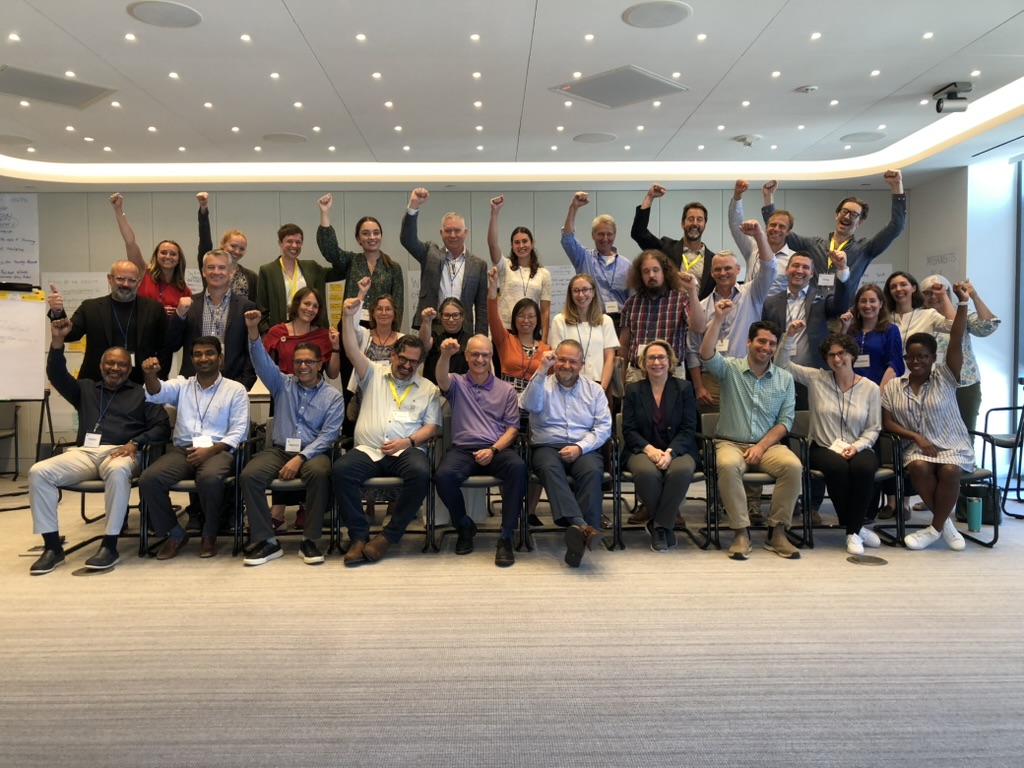
This pilot project was conceived in part during the Insurability Planning workshop that we at CRISP, the Climate Resilient Insurance Strategy Project, co-designed and facilitated with InnSure in Boston last July. This event was held almost exactly one year after the initial Property Insurance Strategy Forum in Miami-Dade County.
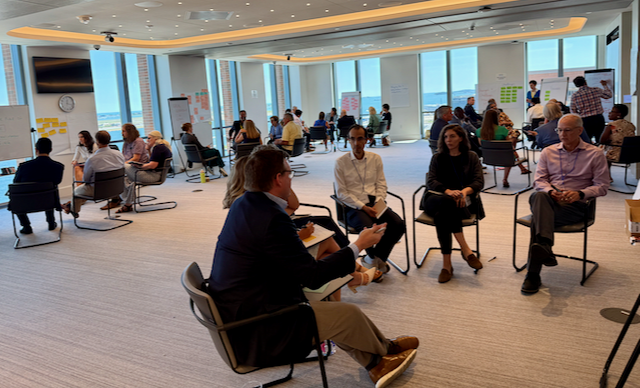
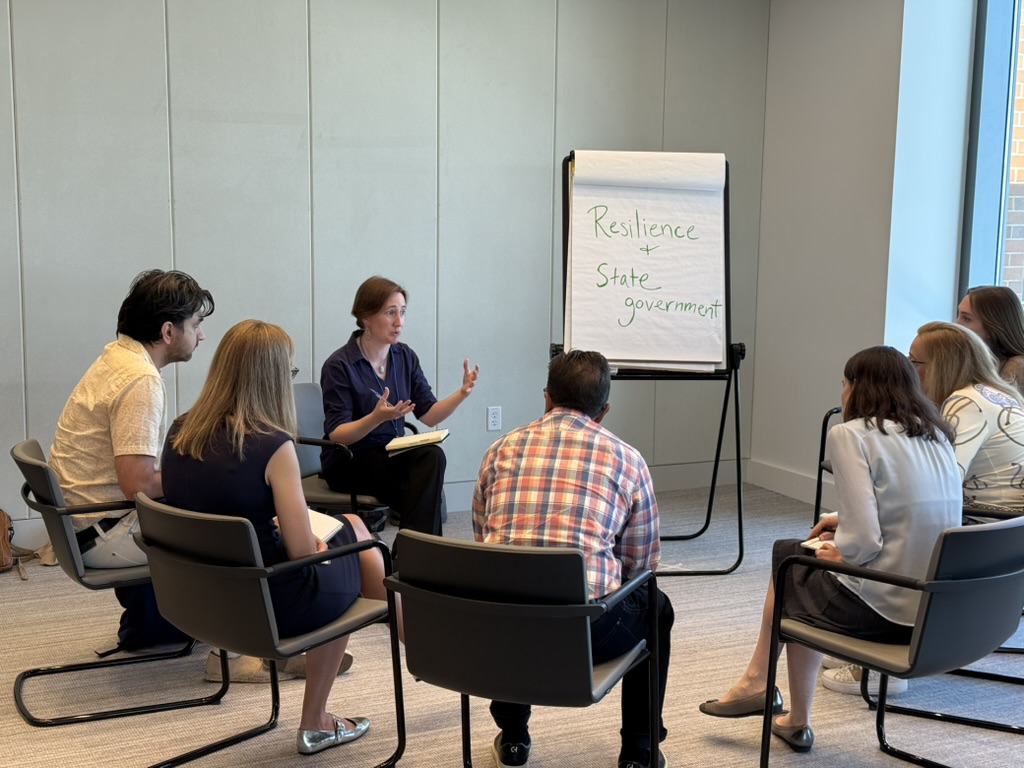
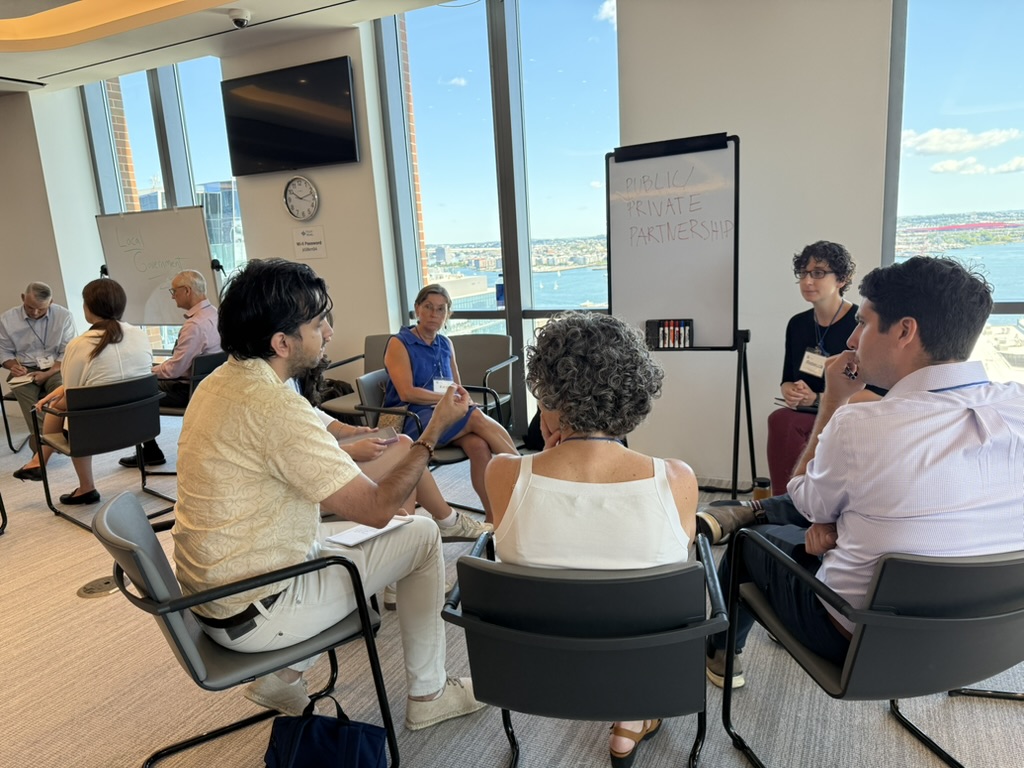
In the course of these workshops, we helped public, private, and civic actors work together to develop a shared analysis of the property insurability crisis and then sketch out strategic opportunities to work through it together.
During our time together, we didn’t pretend that any of us could “solve” the problem. Instead, we were doing the next best thing.
There are no panaceas – neither for climate change, nor for insurance against its impacts.
Climate change is the ultimate “wicked problem,” in that it has many different causes which interact in nonlinear and unpredictable ways, yielding effects that are experienced differently by different people, who themselves might have different values and therefore different understandings of what the problem even is. And the megawicked problem of climate change is giving birth to more wicked problems, like the challenge of insurability in a changing climate: less predictable, more extreme weather is causing more losses from destructive events, which makes insurance more expensive, which makes it difficult to finance adaptation that can mitigate the risks of the changing climate.
We call these problems “wicked” because they can’t fully be solved, and not only that: they are hard to even think clearly about. Culturally, we tend to assume that, given any problem, there can be “an app for that” – just waiting to be designed by someone clever enough. But in these cases there’s no quick fix, and we might not even agree on what the problem really is.
That doesn’t mean the situation is hopeless. Societies have, over time, tamed some wicked problems. (For instance, we halted ozone depletion; we greatly reduced child labor. Notably, these problems are diminished but not fully resolved.) Taming wicked problems entails building capacities to cope with them. That process begins when different kinds of people get together to talk.
Plymouth’s project is what it looks like when a community moves from talk to action. Assuming the pilot successfully achieves its aims, it won’t solve the problem – but it will enable Plymouth to know which coping capacities they most urgently need to develop. (Of course, that will involve getting back together to talk. And repeating the cycle indefinitely.)
Start with low-hanging fruit, but think about the whole tree.
Though the insurability problem has no quick fixes, InnSure’s Plymouth pilot points to some relatively straightforward opportunities – ”no brainer” kinds of action – that can promote resilient adaptation in a community while simultaneously making it easier to insure. It won’t solve the whole problem, but it can buy time while building trust in our ability to make more progress in the future.
Another good example of such “no brainers” are initiatives like FORTIFIED grant programs – active in states like Alabama and North Carolina. These may be funded by some combination of government grants and insurance industry offerings, helping property owners get into compliance with industry standards for wind risk mitigation.
Similarly, InnSure is also working with municipal leaders in Salem, Massachusetts, leveraging funding from the QBE Foundation, to offer free flood risk audits to local property owners. These audits calculate the potential benefit (in future losses avoided) from various risk mitigation measures. InnSure then works with insurers to arrange for discounts on premiums paid by risk-mitigating property owners.
The expected result: fortified homes and lower premiums for homeowners; protected tax base and enhanced resilience for municipalities; confidence for insurers to keep serving the market. Win-win-win.
Of course, even if every one of these programs and others like it are totally successful, there’s only so much risk that coastal communities can actually mitigate. In the long run, many coastal communities will eventually become simply uninsurable.
To cope with this reality, it seems that we’ll need to entirely reimagine society’s relationship to insurance. We don’t have “no-brainers” for this. But we have to start somewhere. The easy-to-understand, immediately actionable, near-term solutions are exciting to people. They get important stakeholders to the table, ready to talk.
Beyond one-off events: envisioning a “laboratory of democracy”
When designing and facilitating InnSure’s Boston workshop, our main objective was to maximize people’s opportunities to talk – and listen – to each other. That means “no panels, no presentations.” Rather, we create spaces for different people to reflect on their different perspectives. There are no experts who can tell us everything we need to know to get where we need to go, but when we just listen to each other, a kind of magic happens.
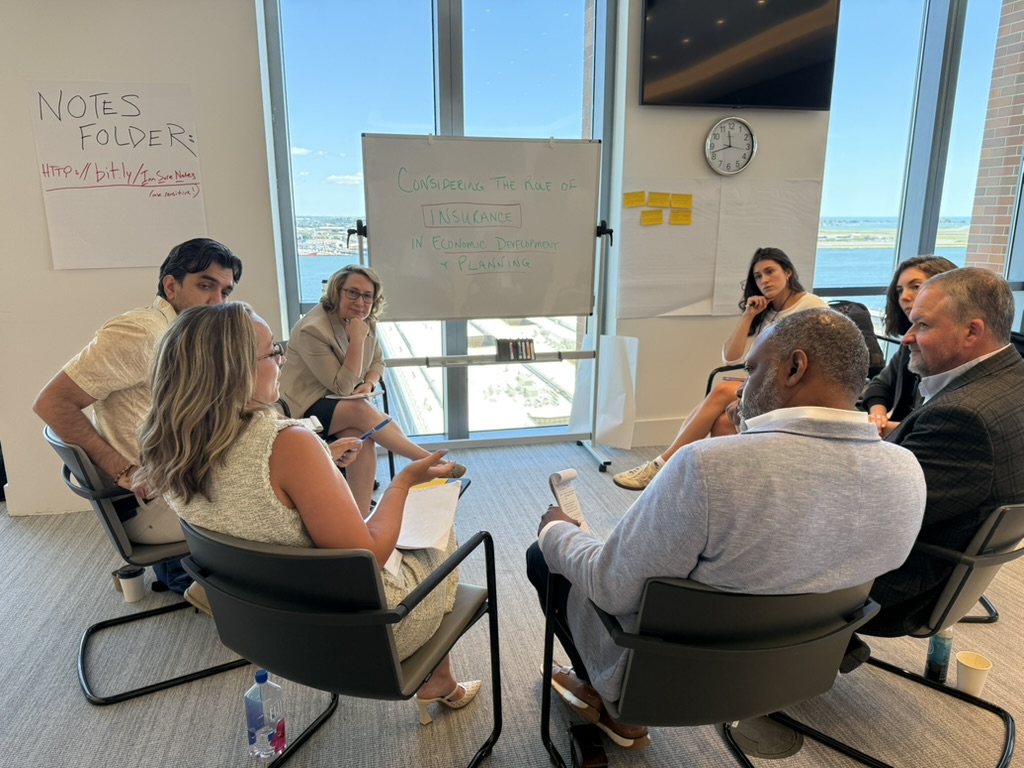
Our workshops tend to get nearly-unanimously positive feedback, and at the end it’s typical to hear at least one or two people say something like “this is the best meeting I’ve ever attended!” I don’t think this reflects our extra special secret skills; rather, it reflects how poorly most meetings serve the purpose of grappling with complexity together.
That said, while I believe such spaces for multi-stakeholder dialogues are necessary for us to cope with these wicked problems, I will also be the first to acknowledge that they are not sufficient. Talking gets us started, but only doing can get us where we want to go.
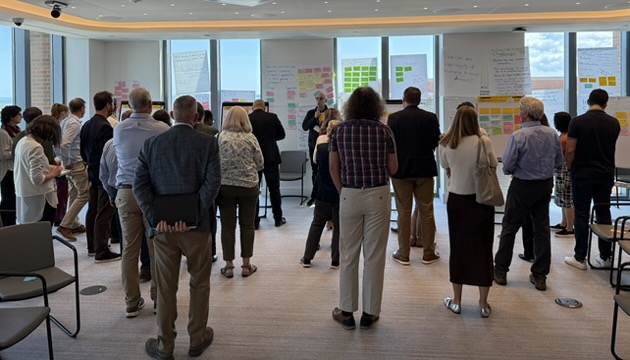
In Boston, InnSure and their partners in Plymouth and collaborators in state government spent their time together conceiving a shared strategy that eventually bore fruit in this year’s pilot. This was understood to be just one step in a broader process of making Massachusetts what people described “a test-bed for innovation.” There was a lot of excitement about the idea of building “a platform” for insurability-oriented resilience initiatives – by which, fortunately, nobody meant an “app,” but rather institutional infrastructure for knowledge exchange and collaboration.
Since there is no one single actor who can take a single action to solve this problem, we need many different actors in many different arenas to chart their own course in coordination with each other. This kind of “polycentricity” is difficult – so we need to invest in it, and even better, make it enticing. So: no panels! No keynotes! Let people talk to each other. Since we’re never going to fully solve the problem, we’ve got to make it gratifying – even fun – for people to come together and cope with it.
If you’re interested in learning more about InnSure’s pilot programs, reach out to Steve Brandt at steve@innnsure.org. And if you’re interested in organizing a fun, participatory event about climate adaptation and the insurance crisis in your community, reach out to us at insurancestrategy@aspirationtech.org. And stay tuned for more reflections on what we’re learning.