More on “the Value of Having Values”: beyond openness, smartness, and efficiency
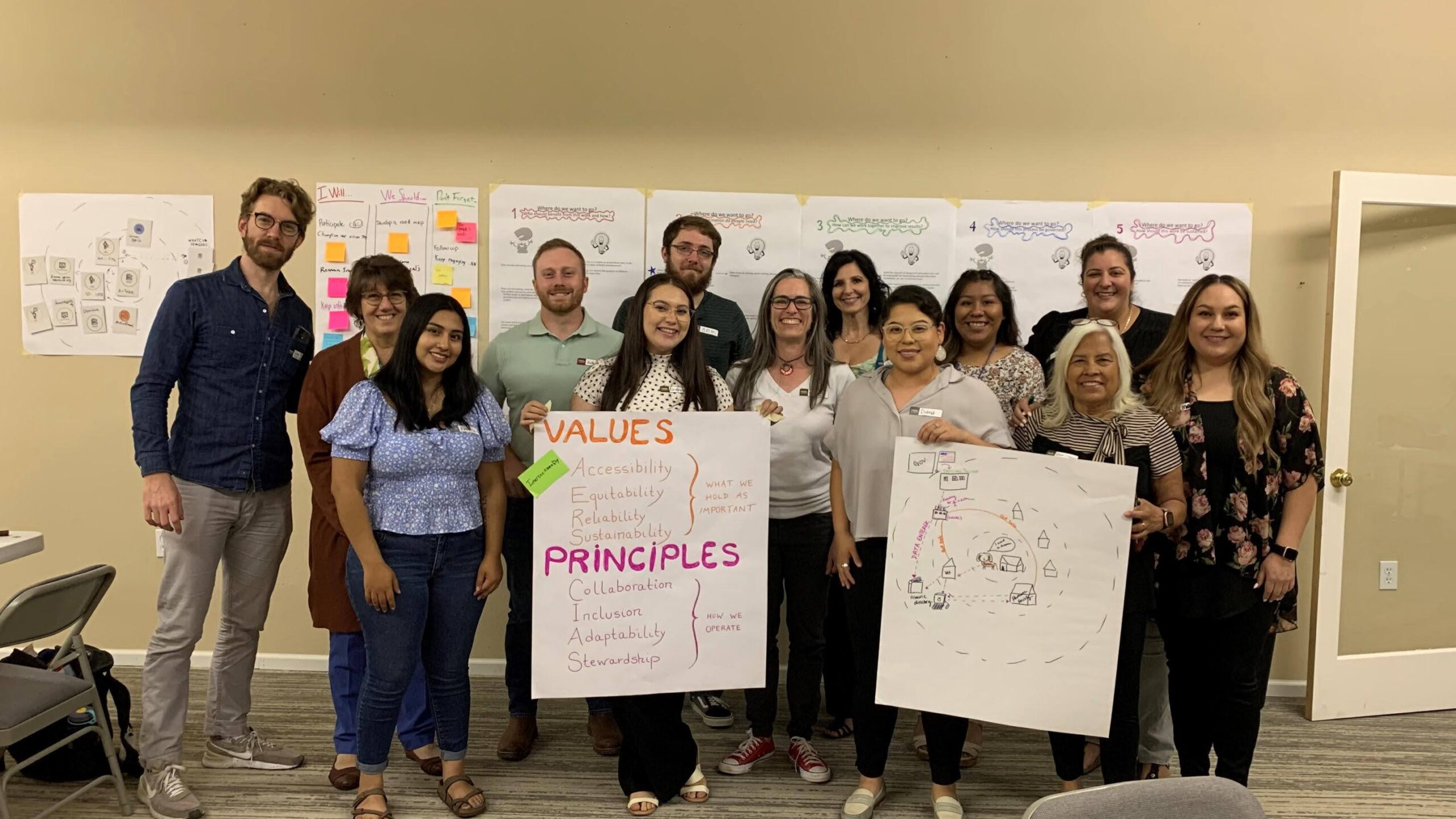
Late last year I posted a pre-publication paper which is now post-publication! From Cambridge University Press, The Environmental Knowledge Commons features my article “The Value of Having Values,” right up front: Part 1, Chapter 1.
I was of two minds when I wrote this paper – a practitioner thinking about theory, while addressing theoreticians about the realities of practice. Which is to say I strived for praxis. As I summarized in my first post, my message for academics who study the governance of knowledge commons is that value statements are “constitutional boundary objects” – artifacts that reflect the normative terms for all participants in a collective project – and as such can be applied as critical lenses for institutional analysis. And my message for practitioners is that value statements are tools for governance – and as such ought to be both designed through and used for participatory deliberation, strategy development, and institutional design.
I still suspect this may be a “no duh” kind of point. Indeed, the point is already implicitly made in the Governing Knowledge Commons (GKC) workshop, which has helpfully adapted Elinor Ostrom’s framework of “Institutional Analysis and Design” to address the distinct challenges and affordances of information as a resource. (Compared to natural resources, information is nonrivalrous and inexhaustible, made more valuable through use – but still subject to various collective action problems. The GKC workshop explores these variations and concordances.) In the GKC research framework, a list of diagnostic questions includes: “What values are reflected in goals and objectives (of the commons and its members)?” and “What normative values are relevant for this community?” These questions assume that a community’s values can be inferred through observation. Which, fair enough. As a practitioner trying to apply Ostrom’s theoretical framework to the social process of designing systems for sharing information, I think it can be helpful to ask explicitly: what values are declared in association with a given commons, and how are those normative claims used by members of the commons?
Of course there may be significant and illuminating differences between whatever statements are claimed to be values by a community, and the values that one might infer from behaviors in and of a community. Despite and because of the reality that values statements are not enforceable as rules per se, I think these artifacts deserve careful attention. As signifiers, they can help groups describe the tensions that bedevil collective action, consider the nature of the coping options available to them, and then muddle through efforts to align their actions with their values among tradeoffs and uncertainty.
But as I said: no duh? So I want to further unpack some implications.
Continue Reading →Grappling with the wickedest problem: insuring communities amid climate chaos
With this announcement from the government of Plymouth, Massachusetts about their new “insurability planning” initiative, we see an exciting example of the kind of process that almost all communities will need to undertake in the coming decades.
In partnership with InnSure, a non-profit innovation hub that promotes climate-adaptive insurance, Plymouth will engage multiple stakeholders from the public and insurance sectors, together with community members and civic leaders, in participatory research that synthesizes intelligence about local climate risks, and informs coordinated efforts to mitigate these risks, while improving the affordability and coverage of insurance for their community.
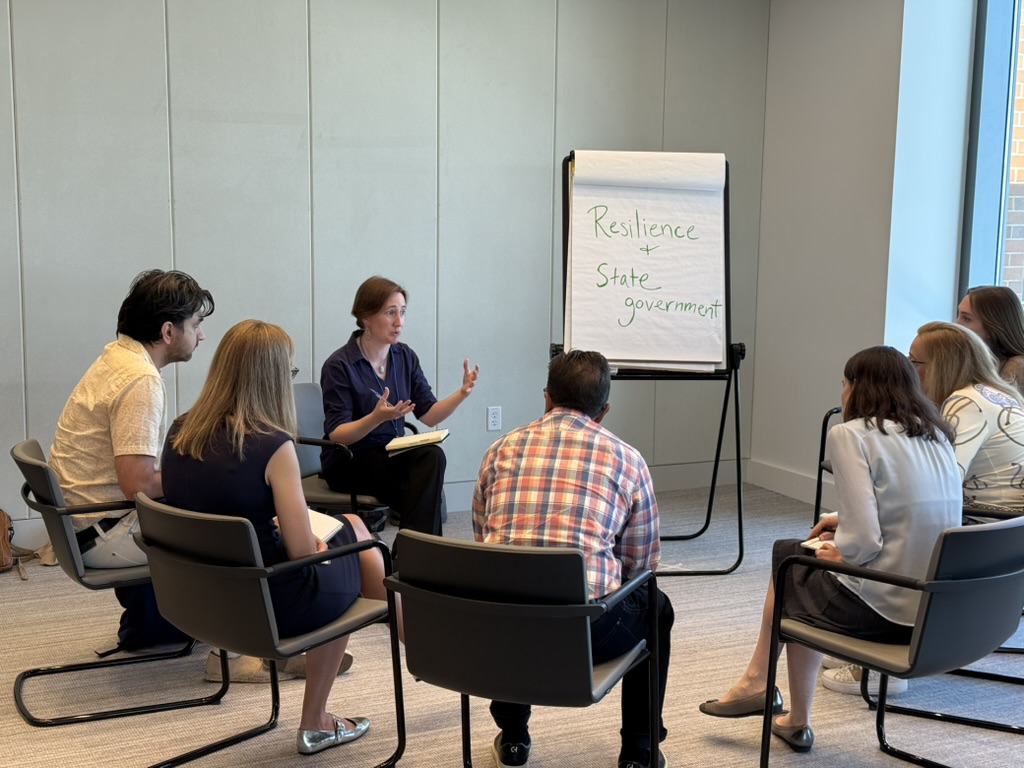
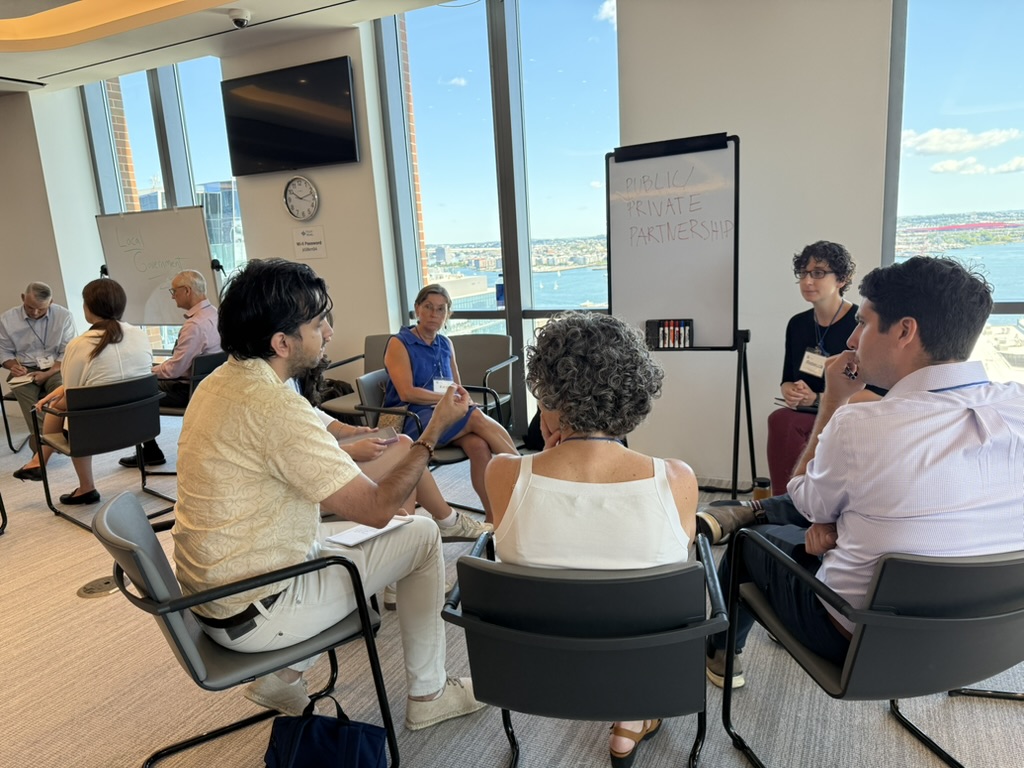
This pilot project was conceived in part during the Insurability Planning workshop that we at CRISP, the Climate Resilient Insurance Strategy Project, co-designed and facilitated with InnSure in Boston last July. This event was held almost exactly one year after the initial Property Insurance Strategy Forum in Miami-Dade County.
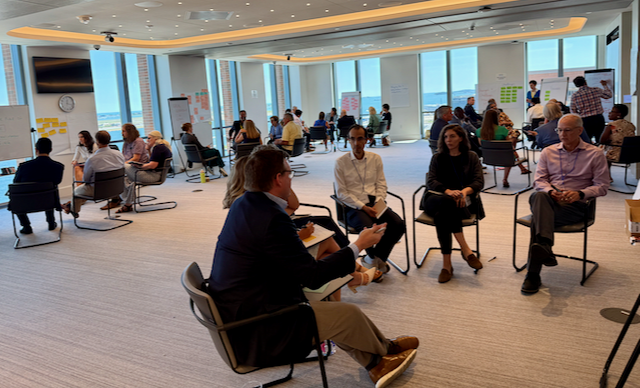
In the course of these workshops, we helped public, private, and civic actors work together to develop a shared analysis of the property insurability crisis and then sketch out strategic opportunities to work through it together.
During our time together, we didn’t pretend that any of us could “solve” the problem. Instead, we were doing the next best thing.
There are no panaceas – neither for climate change, nor for insurance against its impacts.
Climate change is the ultimate “wicked problem,” in that it has many different causes which interact in nonlinear and unpredictable ways, yielding effects that are experienced differently by different people, who themselves might have different values and therefore different understandings of what the problem even is. And the megawicked problem of climate change is giving birth to more wicked problems, like the challenge of insurability in a changing climate: less predictable, more extreme weather is causing more losses from destructive events, which makes insurance more expensive, which makes it difficult to finance adaptation that can mitigate the risks of the changing climate.
We call these problems “wicked” because they can’t fully be solved, and not only that: they are hard to even think clearly about. Culturally, we tend to assume that, given any problem, there can be “an app for that” – just waiting to be designed by someone clever enough. But in these cases there’s no quick fix, and we might not even agree on what the problem really is.
That doesn’t mean the situation is hopeless. Societies have, over time, tamed some wicked problems. (For instance, we halted ozone depletion; we greatly reduced child labor. Notably, these problems are diminished but not fully resolved.) Taming wicked problems entails building capacities to cope with them. That process begins when different kinds of people get together to talk.
Plymouth’s project is what it looks like when a community moves from talk to action. Assuming the pilot successfully achieves its aims, it won’t solve the problem – but it will enable Plymouth to know which coping capacities they most urgently need to develop. (Of course, that will involve getting back together to talk. And repeating the cycle indefinitely.)
Start with low-hanging fruit, but think about the whole tree.
Though the insurability problem has no quick fixes, InnSure’s Plymouth pilot points to some relatively straightforward opportunities – ”no brainer” kinds of action – that can promote resilient adaptation in a community while simultaneously making it easier to insure. It won’t solve the whole problem, but it can buy time while building trust in our ability to make more progress in the future.
Another good example of such “no brainers” are initiatives like FORTIFIED grant programs – active in states like Alabama and North Carolina. These may be funded by some combination of government grants and insurance industry offerings, helping property owners get into compliance with industry standards for wind risk mitigation.
Similarly, InnSure is also working with municipal leaders in Salem, Massachusetts, leveraging funding from the QBE Foundation, to offer free flood risk audits to local property owners. These audits calculate the potential benefit (in future losses avoided) from various risk mitigation measures. InnSure then works with insurers to arrange for discounts on premiums paid by risk-mitigating property owners.
The expected result: fortified homes and lower premiums for homeowners; protected tax base and enhanced resilience for municipalities; confidence for insurers to keep serving the market. Win-win-win.
Of course, even if every one of these programs and others like it are totally successful, there’s only so much risk that coastal communities can actually mitigate. In the long run, many coastal communities will eventually become simply uninsurable.
To cope with this reality, it seems that we’ll need to entirely reimagine society’s relationship to insurance. We don’t have “no-brainers” for this. But we have to start somewhere. The easy-to-understand, immediately actionable, near-term solutions are exciting to people. They get important stakeholders to the table, ready to talk.
Beyond one-off events: envisioning a “laboratory of democracy”
When designing and facilitating InnSure’s Boston workshop, our main objective was to maximize people’s opportunities to talk – and listen – to each other. That means “no panels, no presentations.” Rather, we create spaces for different people to reflect on their different perspectives. There are no experts who can tell us everything we need to know to get where we need to go, but when we just listen to each other, a kind of magic happens.
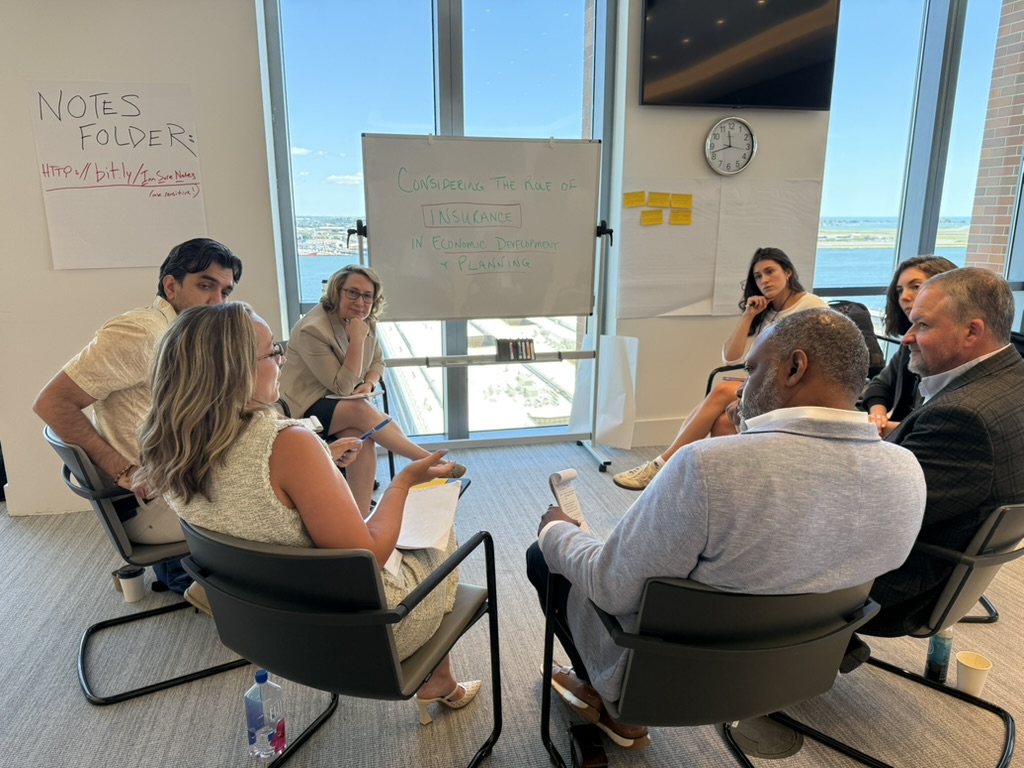
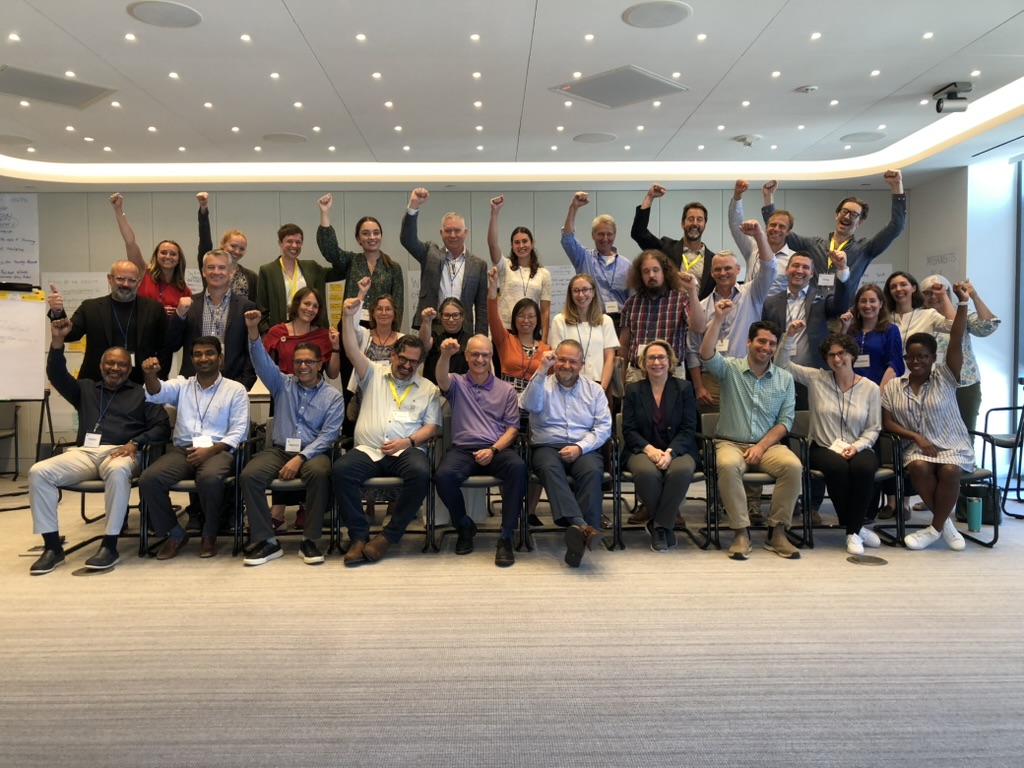
Our workshops tend to get nearly-unanimously positive feedback, and at the end it’s typical to hear at least one or two people say something like “this is the best meeting I’ve ever attended!” I don’t think this reflects our extra special secret skills; rather, it reflects how poorly most meetings serve the purpose of grappling with complexity together.
That said, while I believe such spaces for multi-stakeholder dialogues are necessary for us to cope with these wicked problems, I will also be the first to acknowledge that they are not sufficient. Talking gets us started, but only doing can get us where we want to go.
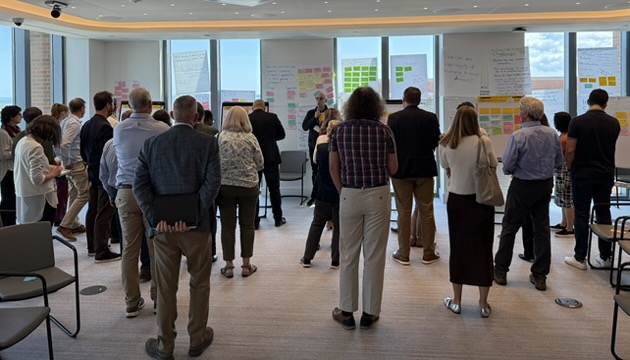
In Boston, InnSure and their partners in Plymouth and collaborators in state government spent their time together conceiving a shared strategy that eventually bore fruit in this year’s pilot. This was understood to be just one step in a broader process of making Massachusetts what people described “a test-bed for innovation.” There was a lot of excitement about the idea of building “a platform” for insurability-oriented resilience initiatives – by which, fortunately, nobody meant an “app,” but rather institutional infrastructure for knowledge exchange and collaboration.
Since there is no one single actor who can take a single action to solve this problem, we need many different actors in many different arenas to chart their own course in coordination with each other. This kind of “polycentricity” is difficult – so we need to invest in it, and even better, make it enticing. So: no panels! No keynotes! Let people talk to each other. Since we’re never going to fully solve the problem, we’ve got to make it gratifying – even fun – for people to come together and cope with it.
If you’re interested in learning more about InnSure’s pilot programs, reach out to Steve Brandt at steve@innnsure.org. And if you’re interested in organizing a fun, participatory event about climate adaptation and the insurance crisis in your community, reach out to us at insurancestrategy@aspirationtech.org. And stay tuned for more reflections on what we’re learning.
In memoriam: Matt Siemer & AJ Barks
Matt Siemer and AJ Barks lost their lives in a car accident last December. They were friends and people I deeply admired, and when I saw the news I immediately sent despondent messages to a bunch of people I haven’t seen in a long time and spiraled out in my journal. I feel like I owe it to them to gather some shareable thoughts here (since this extremely sporadic blog has been about memorializing lost leaders and friends as much as it has been about anything else).
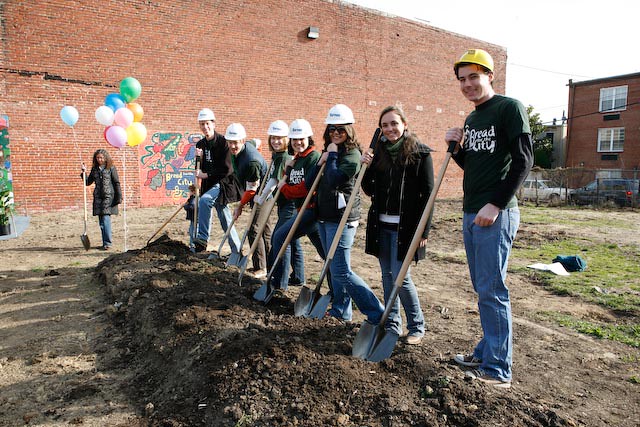
I met Matt during my interview for a staff position at Bread for the City. This job is still the actual-employment job I’ve liked best (not a particularly high bar to be sure), and in a way Matt was my main guide through my onboarding into that world. I was the “communications guy” and he was the volunteer coordinator, we both sat in the “Devo Office” (ie development). Our roles didn’t have all that much to do with each other except that the stories of the organization were our currency. About how the Food Pantry worked with both volume and care; how the medical clinic helped mend thousands of whole broken people; how the legal clinic helped a family one day and won policy concessions the next; how the social workers tried to figure out how do almost anything else that could be done. In that first formative year, he helped me see how all of this was happening in the organization, and also to see so many things about the world we operated in that made it all necessary.
I shared much affinity with Matt, one of those rare examples of non-toxic masculinity. A real weirdo but in the most good-humored way. He wore mismatched socks every day and had been for years, apparently on a dare. (It was a habit I tried myself for a few months before concluding that I didn’t have the charm to really get away with it.) He was constantly reflecting upon the quality of this or that arrangement or idea, the gap between intentions and outcomes, describing it in terms that would veer from somber to hilarious and back in the same breadth.
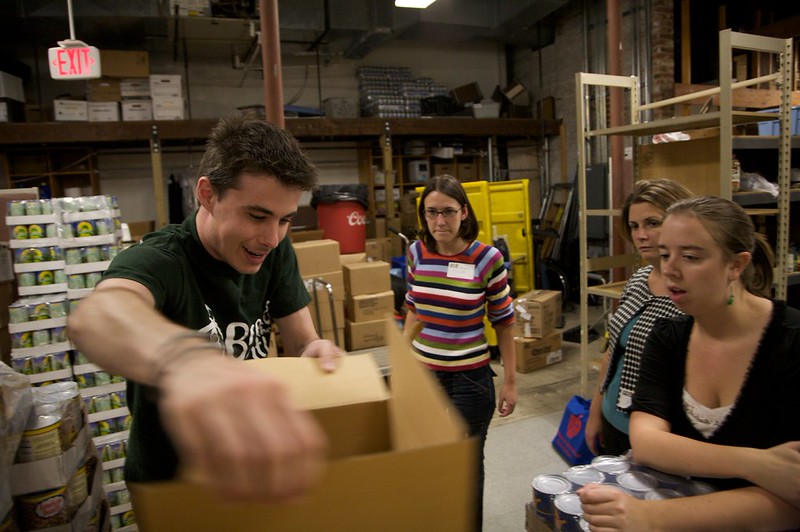
He was agreeably ironic about the fact that his actual job was at least in part technically bullshit: the whole volunteer program didn’t actually amount to much in the way of organizational capacity. We didn’t actually need drop-in volunteers to sustain our professional operations. It was just assumed otherwise by many people, especially people in the corporate social responsibility offices of companies in the city, and as a way to open their door to ask for actual money, we spent our staff time to accommodate them rather than disabuse them of the notion that their time was needed. Matt would give them a tour, then place them in the food hangar where they would unpack and flatten food cartons, then take a photo and thank them for their service. These volunteers were often trained professionals on a work-mandated service day, their time was probably worth enough that they could have easily saved the hour, made a donation of $100, and everyone would have come out ahead. Matt believed that building relationships with these people and their organizations could be valuable even if the time they volunteered actually wasn’t. He wouldn’t pretend otherwise if you asked. But he also wouldn’t throw it in your face.
In that, he and I were built different.
As I became more comfortable in the organization, and more appreciative of the breadth of knowledge and depth of relationships that weaved through the place, I became more excited about what we could try to accomplish there. After a year on the job, my ambitions started outgrowing the job itself. The organization was expanding into a bright and capacious new facility and I was organizing budget advocacy campaigns, community wireless networks, etc. I considered Bread for the City a platform on which we could conduct transformative social alchemy: not just a service mechanism, but a base for building power. Cross-class, interracial, community power.
I assumed Matt would see this potential too and join in this mission. But Matt was never so presumptuous as to call a meeting, let alone challenge people to consider what we might do differently together. The only time we ever had cross words with each other was actually the week I launched the Save Our Safety Net campaign. Matt was concerned, understandably, that it would blow up in the organization’s face, and protecting the organization struck him as more important than the potential benefit of any organizing adventure. At the time I thought he was just too nice, and too risk averse. But now I’d say that though he was always interested in exploring boundaries, he was never one to push them, and rather had a Taoist disinterest in grasping for leverage: nothing that would impose himself upon another person for any purpose other than assistance or delight.
It felt sudden to me when Matt announced that he was leaving to go to grad school – to study hermeneutics, of all things. I was a little surly about it, maybe also patronizing, and pretended to not understand what “hermeneutics” meant. But if you read this correspondence from Matt that I published on this blog with his permission (one decade ago this week), you can get a sense of it.
We drifted apart after that, but we didn’t fall entirely out of touch. From afar, his behavior on Facebook turned outright impish, selecting the female gender and the name Vincent St Simon (I never was sure whether it was a reference to the apostle or the socialist), and RSVPing “Yes” to every event that I organized long after he was no longer in DC, events I organized in other cities. Just mild trolling, and if it was ever commented upon he would then break into lengthy existential reverie that reverberated on the screen with the sound of his Bavarian Herzog impression. Typical of Facebook, I can’t find much of the content from these exchanges anymore.
Over time, after grad school, he and AJ both followed similar courses: they each volunteered for a service organization (he, a mobile health clinic; she, a women’s health center) and in these places – small, scrappy – the volunteering appeared to really matter. From my limited understanding, they seemed to be the kinds of organizations that Bread for the City itself had originally emerged from back in the 70s: volunteer-driven, peer-managed, and intimately entangled with the communities they were designed to serve. In each org, Matt and AJ ascended over the years to become executive directors.
I managed at least a couple of visits to see them, both brief but joyful. In recent years I’ve done a bit of work in Chicago and I kept vaguely anticipating that there would soon be a moment ripe enough for me to reach out and elicit their input, maybe even try to get them engaged. The moment never came. I shouldn’t have waited.
For me, this loss cut into a part of my psyche that’s already been deeply bruised and aching. During that time in DC, I felt like I’d finally arrived personally and professionally at a place of purpose: I was working in my community, at a principled and beloved institution, under a hopeful transition to an exciting new federal Administration. The ’08 election unfolded across my first year on the job, and after the gloomy Bush years it felt like the most exciting place to be in the world. In between photo ops at the food pantry and client advocacy meetings, we talked about a lot of big ideas for the future: a guaranteed income, a civil Gideon, a network of cooperative grocery stores linked to self-organized urban agriculture projects, a reclaimed capacity for tactical and equitable urbanism. When the Citibikes were first installed, I tried to get out of them a commitment of a thousand free passes as transportation assistance for Bread for the City clients; it didn’t happen, but it didn’t seem totally out of the question. I remember walking around with Matt on Rhode Island Ave, spitballing ideas for a campaign to ban cars and reclaim it for bikes and pedestrians (like they have recently done on Georgia Ave like one day a month). When the Great Recession hit DC’s municipal budget, and the city moved to cut human services right when need was skyrocketing, we spent tense, anxious hours talking with our executive director about what it might look like to stop playing only defense – if they’re going to cut back funding just when more people are coming to us for help, we eventually wondered, well we should show everyone what the true cost of austerity really is. Go on an organizational strike, lead the service nonprofits in a mass walkout, open up camps on the Mall. Pick up where MLK Jr’s Poor People’s Campaign tragically left off. This was a year before Occupy Wall Street. Just a couple years later, Matt was back at school and my organizing efforts at Bread for the City had caused enough tsuris that I also had to leave the organization. Not five years after that, the moral arc of the universe zagged away from justice; now, a whole generation later, it’s hard for me to even believe in very idea of an arc that bends that way. For ten years, I’ve been telling myself that I’m doing the work of grieving for the loss of our generation’s future; losing Matt and AJ made me realize that I’m an still an absolute beginner in true grief.
But of course loss has its own logics, and they work in weird ways.
After the accident, though Matt had gone immediately, AJ was in intensive care. It sounded like maybe she had never regained consciousness. I gave money to the gofundme and held her in my thoughts, and kept checking for updates. A week or so later, she too passed. When I saw that news I felt another drop in my gut, but then, to be honest, it was swiftly followed with a kind of release. Sorrow for her family and friends – but for AJ, and for AJ & Matt together, I felt a kind of relief.
You see, that first year I lived in DC, I only had the Smiths’ Singles CD in my car; whenever I started the car, it would start from the top (“Hand in Glove”). And whenever I gave Matt a ride somewhere, he’d skip to the last song, and leave it on repeat, then keep singing it afterward in the office, maudlin as the moment could allow: “There is a Light that Never Goes Out.” Who knows how many times we sang it, giggling at Morrissey’s histrionics, marveling at the extravagant deliriousness of his emotional posture, the idea that you could share such a depth of feeling with another that even the greatest misfortune would be an occasion to cherish. “To die by your side, the pleasure and the privilege is mine.” At least in the end they had that.
Love and miss you both forever.
New paper: the Value of Declaring Your Values
A few years ago, shortly after I’d published “Averting Tragedy of the Resource Directory Anti-Commons” in The Cambridge Handbook on Commons Research Innovations, Angie Raymond asked if I would contribute a chapter to a book about environmental knowledge commons.
Governance of environmental knowledge? Sounds like some of the most important work in the world, I told Angie, but it’s just not an area I have any direct experience in.
Angie insisted that I could come up with something relevant to contribute. And I’m glad she did 🙂
The resulting paper is now pending publication in The Environmental Knowledge Commons, coming soon from Cambridge University Press, edited by leadership of the Ostrom Workshop at Indiana University (where I am still, to my ongoing delight, welcomed as a visiting scholar). I presented a draft over a year ago at IU’s seventh quinquennial Workshop on the Ostrom Workshop; and now that it’s been edited, I’ve been graciously permitted to share a pre-pub version here.
Check the paper out embedded below, and linked here. I would welcome your feedback, so I’ve left comments on.
The paper is entitled “The Value of Having Values,” and in case it’s not already clear from the start, I’ll just add that I still wonder whether the point it makes is kinda like ‘no duh.’ Statements of values and principles are standard sections of organizational About pages, arguably banal if not quite ubiquitous. But sometimes it’s worthwhile to make explicit that which might otherwise be assumed but undiscussed. In this case, I think we should take care to say what we consider to be “good.”
If right now you’re thinking, “no duh,” I get it. But I wrote this at the risk of stating the obvious because drafting value statements has come to be a foundational part of my practice as a commoning facilitator (for instance – here, and here, and here, and here, and here), and I wanted to explain the theory behind it.
What are your values and principles – and are they written down? is almost always the first pair of questions I ask when connecting with a new party, whether it’s a one-time chat or a major consulting contract. Sometimes groups already have value statements written down, but often they don’t; and even when they do, I sometimes hear that these statements are considered to be outdated or unclear. Sometimes people are resistant to the idea of taking the time to articulate and agree on such statements; people may have experience with conversations about such abstract subjects that were tense, boring, unproductive, etc. Whether or not they know their game theory (probably not), people often seem to consider discussion of values to be “cheap talk.” Setting aside the question of whether cheap talk actually does have value (I think it does!), I think value statements are very useful – or rather they can be useful, when they’re intentionally designed and actually used.
To get bit jargony for a moment: in the paper, I make the case that value statements should be considered constitutional “boundary objects” – which is to say, tools that groups can use to design a kind of moral and ethical space in which different kinds of people with different interests can form a shared identity, and with it, shared normative commitments. Value statements tell us (or rather help us tell ourselves) who we are, what we want to be like, and by correlation what we don’t want to be like. The process of articulating such value statements can be a critical phase in the formation of a group’s identity; and by subsequently referencing these statements in decision-making processes, a group can grow through challenges, and maintain itself through changes. This kind of shared language helps us transcend the tragic individualism that otherwise often dooms efforts to act collectively.
In the final section of the paper, I describe my approach to working with groups to draft and revise values statements. This often sounds to people like it will be frustrating or even futile – probably because they assume it to involve writing by committee. It doesn’t need to happen like that. With a method like the Advice Process, for instance, specific people can be empowered to draft statements in relatively rapid iterative cycles, eliciting and incorporating feedback from all concerned parties through each iteration. (The first time I felt truly useful as a non-coding contributor to open source was when I coached a reluctant appointee of a major open source initiative that was undergoing a transition out from under its Benevolent-Dictator-for-Life status. He was tasked with managing the process of drafting a new set of principles to replace their founding statements which were essentially a decades-old bulletin board post. He admitted he expected to fail in this task. In 30 minutes we sketched out a project plan, which seemed to totally change his outlook; one year later, a new statement of principles was formally approved by their board.)
If, in these processes, any significant issues come up that reveal significant disagreement among parties, you’ve probably identified a significant conflict of interests among parties. That’s okay, of course – but figuring out how to address these issues early can make all the difference in avoiding tragedy later on.
I’ll have more to say on this topic – and how this relates to quite a few other topics – but will leave it here for now with a final note: I’m eager to hear your feedback on this paper and the work! Find me and let’s talk 🙂
P.S. Here again is the link to the doc with the paper. That GoogleDocs embed feature probably doesn’t look great on your device rn, but in principle it’s a good feature so I’m leaving it in (for now).
Facing the crisis of insurance in Miami and beyond: polycentric strategies for a risky world
Tl;dr– Check out the report on the 2024 Miami Dade Property Insurance Strategy Forum, now available on Insurance for Good. In this post, I’ll tell the story of how the strategy forum happened in the first place, and share my own takeaways from it.
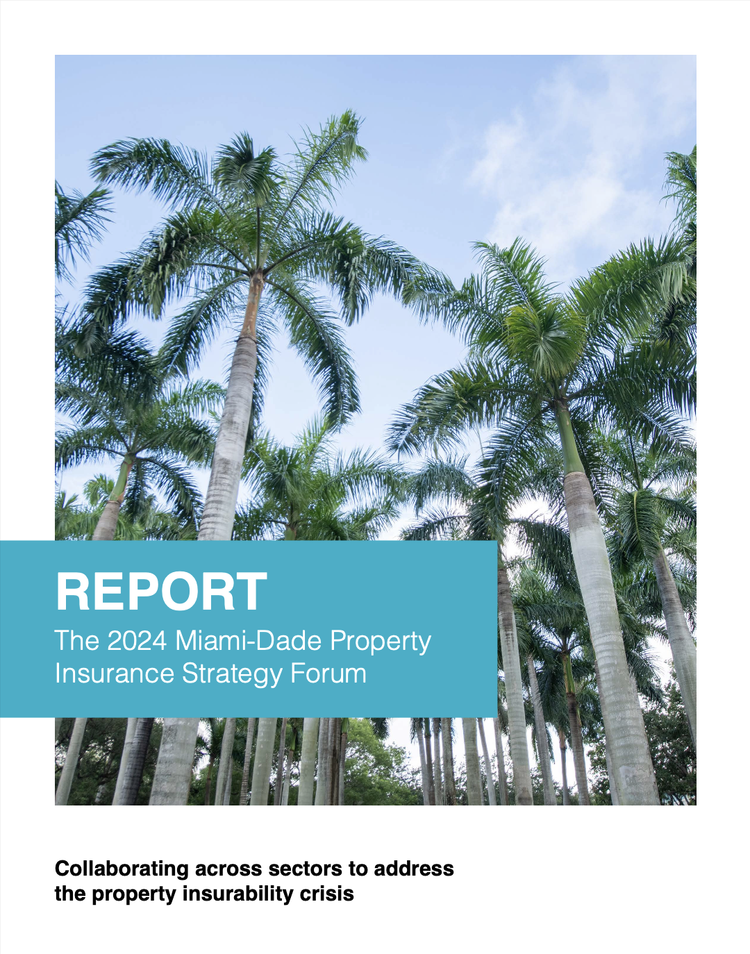
When people learn that I’m from Miami, they sometimes ask me how long we have until it’s under water. I always respond that long before it’s actually flooded, the real estate market will sink under the collapsing insurance market (and with it, perhaps our entire economy). I’m not just a lone Cassandra here; at least some people well-established in the real estate and insurance sectors have been warning us about this for years. We’re already seeing this future intrude into our present: premiums in South Florida are climbing in many cases about 20% a year – and given the damage from Helene and Milton, we can expect that climb to accelerate next year. At this pace, most people simply won’t be able to afford insurance here within the next decade. So even if our decades-long lucky hurricane-miss streak holds, we’re already well on our way to being in over our heads.
Talking about this stuff doesn’t exactly make me popular in Miami’s social scene. It’s hard to imagine a culture less suited for this kind of foresight than our fast-fashioned, pleasure-centered, disposable Magic City. But there are at least a couple dozen other people out here thinking about our actual future, and it hasn’t been hard for us to find each other. A significant fraction of that tiny subculture participates in a book club about climate change and Miami that I have helped facilitate for years. (We started in 2020 with the publication of Ayana Elizabeth Johnson and Katharine Wilkerson’s All We Can Save; and we just last month finished the good Dr Johnson’s second book, What If We Get It Right?, an excellent and let’s just say poignant post-election read.)
One of our book club’s longstanding members is Kate Stein, who was a local journalist covering climate issues when I first met her while attending some (bleak!) City of Miami “sea level rise commission” meetings. Kate later served as the city of Surfside’s first sustainability and resilience officer, right around the time of the terrible condo collapse there. From these harrowing experiences, Kate followed her nose into graduate studies in risk management at the London School of Economics – and now works at WTW, one of the global insurance brokerages headquartered in London.
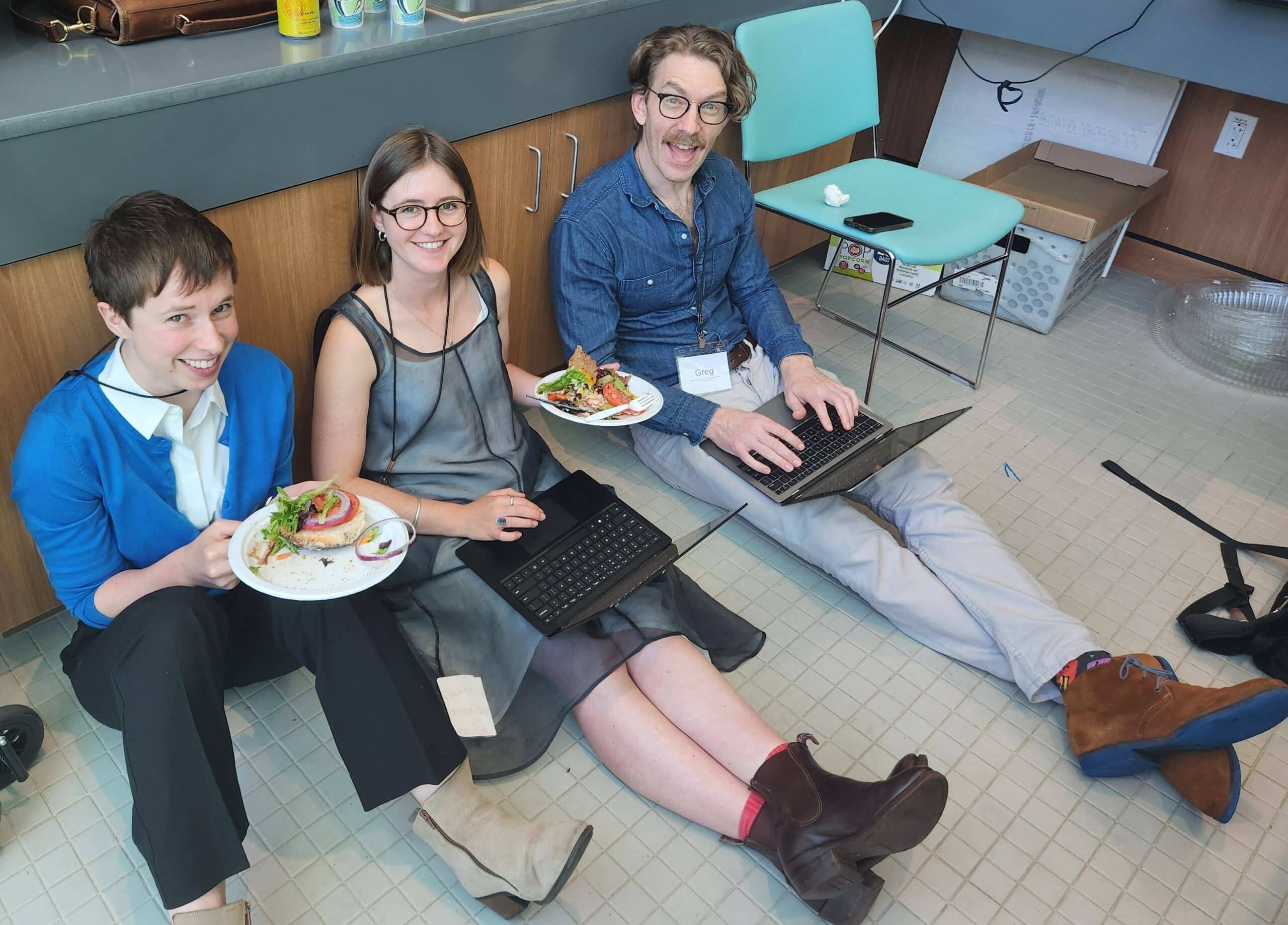
Last year I was visiting London and caught up with Kate over breakfast at Dishoom. It wasn’t long before I expressed some cynicism about the state of the insurance market, to which Kate responded with her characteristic optimism. “There are things we can do,” Kate insisted to me. She believes that there are various ways that governments, insurance companies, real estate developers, and other institutions could be working together to facilitate adaptation and risk management more effectively. “We just don’t have any opportunities to get together and talk to each other.”
Well that, I said, is something I can help with.
Continue Reading →Governing the Resource Directory Data Commons
Even for a blog that gets a new post like once a year or less, it’s a bit awkward that I haven’t actually posted on here about the main thing I’ve been working on for the past 10 years – as I’ve mostly just left all that on Openreferral.org. And there’s a lot there. I’m proud of what we accomplished (even though it took at least three times longer to get where we are than I’d ever anticipated) but also happy to have this personal blog space be pretty much its own (low volume) thing.
That said, I figure it’s at least worth referencing here the capstone pieces of work that capture the essence of the project that has consumed more than a decade of my adult life. These materials feel to me like they’re a dissertation as part of a kind of “PhDIY.”
First and foremost, there’s “Averting Tragedy of the Resource Directory Anti-Commons,” an essay published in the Cambridge Handbook on Commons Research Innovations (2021), in which I analyzed the resource directory data dilemma through the lens of knowledge commons governance, and offered a set of institutional concepts with which communities can sustainably produce resource data as a public good.
This essay was produced through my partnership with the Ostrom Workshop at Indiana University, where I gleaned from the great wealth of knowledge about institutional design and resource management that has been gathered there in the “Bloomington School” through which Elinor Ostrom produced her seminal work, Governing the Commons. It has been a true privilege to work through these concepts with this community, and I’m grateful to so many people there for their time and support.
After this essay was published, the Ostrom Workshop provided me with some modest funding to develop a visual vocabulary with which we’ve graphically portrayed this set of set archetypal strategies. From this, I co-designed this whitepaper, with accompanying infographics (and haiku!) to describe several complementary models for resource data production strategies. (Thanks to Ian Dutnall at Icographic for design support :))
This post on Open Referral’s blog provides a fuller unpacking of these materials and their contents.
It has been extremely gratifying intellectually, and modestly fruitful professionally, to engage in this long process of diagnosing a social dilemma, and ultimately prescribing institutional design solutions, through a combination of literature review, field research, and practical experimentation. I feel like my work in this field is now in its final stages, although I also don’t feel it would be responsible to walk away from it entirely; I will continue to consult with any parties who might benefit from engagement with these materials, which could go on for years to come.
I have one more piece of work in this vein, which is already prototyped and something I’ll get around to releasing into the world soon: a participatory guidebook for collaborative design of these institutional strategies, to help stakeholders and practitioners apply these ideas in their own local context. Stay tuned for more on that.
Something is not necessarily better than nothing: Introducing the Principles of Equitable Disaster Response
Last week, a distributed team of community organizers published the Principles of Equitable and Effective Disaster Response. This is a document that we’ve developed through a series of in-person convenings and distributed rounds of feedback over the past two years. (You can review and comment upon the original draft here.)
We first articulated these principles with natural disasters in mind, but now – with a pandemic emergency upon us – we’re sharing them in hopes that they may be useful for people and communities that are mobilizing to respond to this new global crisis.
Below I’ll share some backstory on how I came to be involved in producing this document, and why I think it matters.
Hard Lessons from Hurricane Irma
During the week before Hurricane Irma in 2017, I started up the Irma Response slack which quickly grew into a virtual network of about a thousand ‘digital crisis responders.’ As a network, we did some things that I’m proud of.
In the end, the storm swerved past Miami-Dade. The disaster never quite happened (to us, anyway). Nevertheless, this experience was sobering for me.
First and foremost, I saw firsthand how our institutional systems were almost universally ill-prepared to respond to this crisis. From governments to nonprofits, it was bleak: poor plans, poorly coordinated and poorly communicated. (The number of shelters were woefully insufficient; the evacuation order came late and left tens of thousands jammed on roads as the hurricane approached; the government and the Red Cross blamed each other. I never did find out what the Florida VOAD — Voluntary Organizations Active in Disaster — was supposed to be doing, let alone what it actually did. Etc.)
I also saw how readily regular people from all over the country and the world rallied to help online. This swarm of support was initially exhilarating, then eventually exhausting and frustrating. I saw alarming gaps between these digital responders’ good intentions, their ideas, and the reality of what people needed on the ground.
Most importantly, I saw how the most urgent and appropriate responses to the situation came directly from communities that were most vulnerable to this crisis. Local leaders like Vee Gunder were the first to respond in the communities, with the clearest line of sight to what was needed, and the strongest connection to the people in need — and they would still be there working after the attention withered away. Amid all the attention paid to either the mistakes of the formal institutions, and to the flashy websites and data visualizations produced by the network of civic hackers, these voices were the most important — yet the hardest to hear.
The Crises of Network-Centric Crisis Response
Since I started the Irma Response network, I felt some responsibility for the things happening in it.
In the week before the storm was projected to hit, I found myself spending 18+ hour days tending to the network. An enervating portion of that time entailed responding to crises that were precipitated by our own crisis responses. I intervened when I found people putting out information that could put vulnerable Florida residents (like undocumented residents or disabled people) in danger. I interjected when I found people hacking on “first thought best thought” applications that — if they’d ever be used at all — would waste a lot of time and energy, and maybe even make a messy situation worse. I spent hours a day asking why people were doing various things, and asking people to reconsider whether those things really ought to be done.
The most common response I got was: “well we have to do something!” And I’d have to point out that this was not actually true.
These were difficult conversations. Everyone involved had the best of intentions. They were volunteering their time, out of care for people in danger. They did not feel like there was time to waste in “philosophical discussions,” and they did not feel like we should be “political.”
And at a glance one could understand where they were coming from: with no money and a matter of days, our network built websites, and generated data visualizations, that looked way better than those produced by government agencies and giant organizations with multi-million dollar budgets and timescales of years. Our digital products loaded faster. They were ‘user friendly.’
But just because they looked better, loaded faster, and felt nicer to click on, did not mean they were delivering more appropriate information.
Likewise, someone could (and did) build an app to dispatch random volunteers to “rescue” people in need — and many people volunteered for such rescues. But should we have been encouraging random untrained and unaccountable volunteers to travel by boat (or, in one case I heard from someone in the field, by jetski) to try to rescue vulnerable people? The answer did not seem obvious to me.
Yet we lacked shared criteria with which we — as a community — could critically evaluate what we could do, in order to figure out what we really should do.
Re-aligning Responses Around Community-Centric Leadership
By the day before Hurricane Irma was projected to hit us, I was at my wits’ end — hardly sleeping, dropping balls, losing my temper. The network managed to stay together because of last-minute assistance from a handful of people who had experience facilitating network-enabled, community-centric crisis response. These organizers knew what problems to anticipate, and who knew how to cope with those problems. They helped us bring some order to the sprawling Irma Response network, established documentation for every project within it, and applied a framework to define each project’s objectives.
In the end, Irma swerved around South Florida and hit other parts of the state where we had less of a connection to the community; the main thing we did was help raise money to be distributed through a local foundation. Then things went back to normal all too fast. But the lessons stayed with me.
In the months and years afterward, I stayed in dialogue with that network of organizers.
We convened a series of “Crisis Convenings” hosted by Public Laboratory, attended by organizers from Occupy Sandy, Harvey, Irma, Maria, and Katrina, among others. We shared stories of our own experiences, and found a range of commonalities. In between these events, we shared outputs with broader networks of organizers to solicit their feedback too.
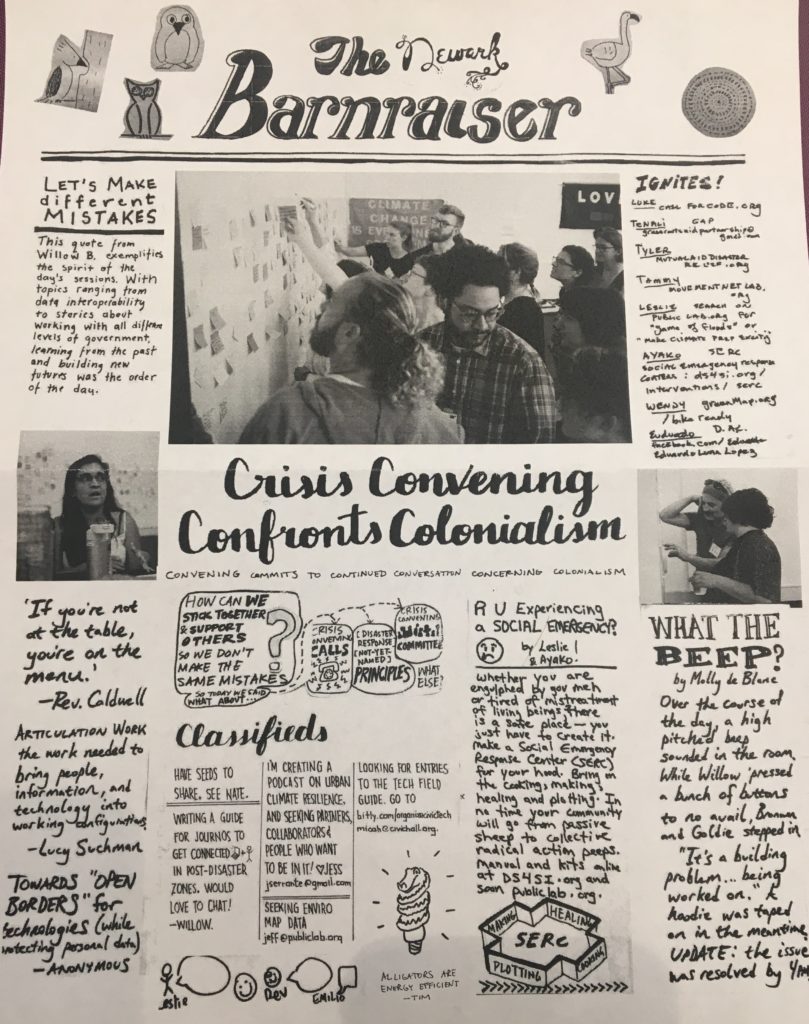
Broadly, there were three themes that emerged through this process:
- The institutions tasked with responding to crisis tend to fail in their responsibilities to provide effective information, resources, and support — especially to communities that are not wealthy and powerful.
- The ad hoc networks of ‘digital humanitarians’ that emerge in response to any given publicized crisis tends to generate more light (visibility) than heat (impact) — and sometimes, their good intentions result in wasteful or even harmful mistakes.
- The most urgent, important, and potentially transformational leadership comes from impacted communities themselves, in which people with firsthand knowledge and longstanding relationships work together to solve their problems.
Across our network(s), the lessons were clear: the failures of formal institutional disaster responses (#1) and emergent ‘digital humanitarian’ disaster responses (#2) can best be corrected by re-aligning their power relationships to center community-based leadership (#3).
We agreed that these insights should be easier to share, so that — in the words of Willow Brugh — “we can at least make more interesting mistakes next time.”
So we reviewed existing statements of principles that had already informed our work or emerged from it. Personally, I’ve long aspired to uphold the principles of the Allied Media Projects and the Detroit Digital Justice Coalition. Some of us had helped articulate the principles of Occupy Sandy and Mutual Aid Disaster Relief. We also found Movement Generation’s Principles for a Just Transition, and thought hard about whether we really had anything new to offer. We listened deeply to organizers from Puerto Rico about how the botched response to Maria is inextricably tied up with a tragic history of colonialism and exploitation.
Ultimately we concluded that we could build upon this body of wisdom by offering a specific framework to guide those who might ask:
“What should we do NOW in this crisis?”
The resulting principles are designed to be immediately readable at a glance, yet one can unpack layers of insights within them and challenges among them:
1) Ask — and listen. We support those who most directly experience the impacts of crisis, and we act in response to their expressed needs.
2) Distribute Power. We promote strategies that effectively distribute information, resources, and decision-making ability, so that people can most effectively adapt to their local circumstances.
3) Collaborate Strategically. We work with institutions, to the extent that such work is in service of our goals of equity and justice.
4) Seek Appropriate Solutions. We understand that problem solving is an ongoing process requiring varied skills — and while we identify common patterns, every situation is unique.
5) Use Appropriate Technology. We prefer tools that are simple, accessible, freely usable, and well-documented.
Read here for some elaboration on each of these.
If people find this doc useful, I hope it evolves along with that use. Organizers can include it in manuals, and in community forums. You might use it to think through dilemmas that may emerge through your efforts. When there’s disagreement or concern, use it to guide your questions and your assessments.
Above all: this is a living document, and we’d welcome your feedback.
What happens now, when we’re all in crisis?
This crisis we’re in now isn’t the kind of thing any of us have had experience with, and I can’t even say those of us who drafted these principles had anything like it in mind. The COVID-19 pandemic is not local; it affects everyone. And it wasn’t quite sudden like a hurricane or earthquake; it unfolded over months, and it’s going to keep unfolding for a while.
So I don’t immediately know how these principles should apply here. Yet as I’ve watched countless “mutual aid” efforts and civic hacking projects popping up around the country and the world, and participated in a few myself, it’s clear that the principles are just as relevant as ever.
For example, Jen Pahlka — Code for America’s founder — recently called attention to a situation in which something is potentially more harmful than nothing:

Sometimes it takes some time, reflection, research and deliberation to figure out what should be done.
We do know that some people are far more vulnerable in this crisis than others. Those who want to do something should let this knowledge focus your attention.
Here’s how you can start: look for the people who have already been helping people who have already been in crisis. Such people are most likely to understand how the crisis is showing up and what kind of response is appropriate. Ask those helpers what they need; listen carefully. Try to build their capacity. Do so using appropriate technology. (New, unproven, and ‘black box’ technology is probably inappropriate. Default to simple, accessible, and when possible nonproprietary tools.) Know that the first answer that comes to mind might not be the most appropriate one. Work with institutions that are already working on the problem, to the extent that those institutions are working (or can be pressured to work) in effective and equitable ways. Repeat.
The root of the word “crisis,” as maytha alhassan once told me, means ‘turning point.’ A fork in the road. A pivotal moment like this can change the story we tell ourselves about our world. As if a veil has been lifted, we can see each other in a new light. As Rebecca Solnit writes in A Paradise Built In Hell, this is the light of people’s spirit, and it’s powerful stuff. It’s so vulnerable though; it’s easy to distort, and easy to snuff out.
We know that every crisis is unique, and also at the same time each crisis relates to and is shaped by a vast intersecting history of other crises. The communities that are most vulnerable to this virus — elders, uninsured, low-wage workers, etc — were already struggling with a failing healthcare system, a broken safety net, etc. Let’s use this as an opportunity to listen to those who’ve been experiencing these crises long before 2020. What’s their vision for a better future? Ask — and listen. Start with that.
I’m grateful to have had the chance to learn through this experience from so many leaders who brought these insights all together, especially Tammy Shapiro at Movement NetLab, Liz Barry at Public Lab, Emilio Velis at the Appropedia Foundation, and willowbl00 at large.
Rest in Power: Dorothy Hawkins
As I need to preface on virtually everything I write, this is better late than never: I want to share some memories of my friend Dorothy Hawkins.
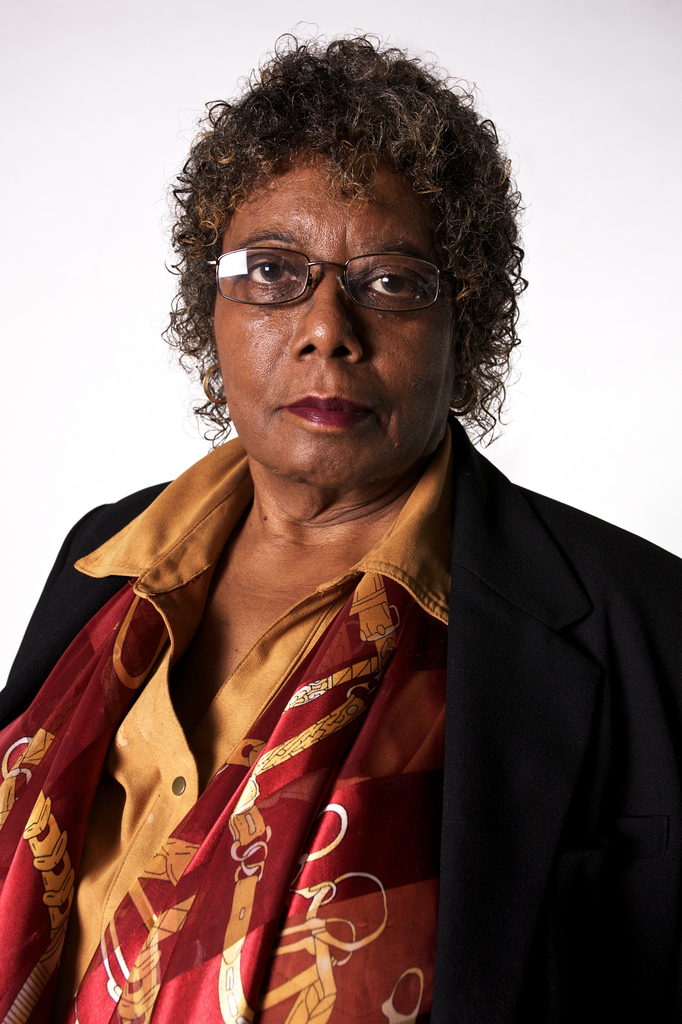
Dorothy was a board member at Bread for the City, my former employer. At the time, she was one of only a couple of board members who actually came from the clientele of our organization. I first met Dorothy while I was getting caught up to speed about the organization’s plans for a major facility expansion: these plans prominently included a dental clinic, in part because Dorothy had strongly called for one.
Dorothy’s dental problems had been escalating for some time — to the point where she was missing most of her teeth, and it was affecting both her health and her job. And she knew that she wasn’t alone. Only one or two other dental clinics in DC accepted Medicaid. It was one of many gaps in the city’s safety net, but one that Bread for the City was clearly in a position to fill. Dorothy had spoken about this with our doctors, and with their encouragement she made it an organizational priority. By the time I came around, it seemed obvious: of course we should have a dental clinic! But it wasn’t always so obvious, especially to other members of the board. Dorothy made it personal. Which is what made it happen.
Dorothy and I had very few things in common, but we got on quite well.
I expressed some surprise when she showed up to one of the Save Our Safety Net Campaign’s long strategy meetings. At this, she cocked an eye and then sweetly dressed me down. “Well I might not make it through the whole thing,” she clarified, “but this ain’t my first rodeo.” She was a labor organizer decades ago, she told me, and she was ready for some trouble. She played an active role in designing that particular action, weighing on on how it might be timed and framed to confront DC councilmembers with publicly visualized choices as to whether to cut funding for services to poor people (vs raising taxes on rich people).
It was harder for me to get her to come out to a much more fun activity: the annual holiday photo session, one of my favorite Bread projects. (At the time, each year was done spectacularly by Steve Goldenberg, and later Jessica Delvecchio.) For me, the holiday photo shoot was a great opportunity to get terrific visual #content. For many of our clients, this was their only chance have a professionally-taken family photo. For everyone, it was a blast. For Dorothy, it was intimidating. She was self-conscious about her teeth.
The first couple of years, she just never made it. When I knew her a bit better (and also knew that we would have to start fundraising around the dental clinic) I promised her no photos would ever be seen by anyone without her approval — and I guaranteed we’d get at least one or two that she’d like. And we did.
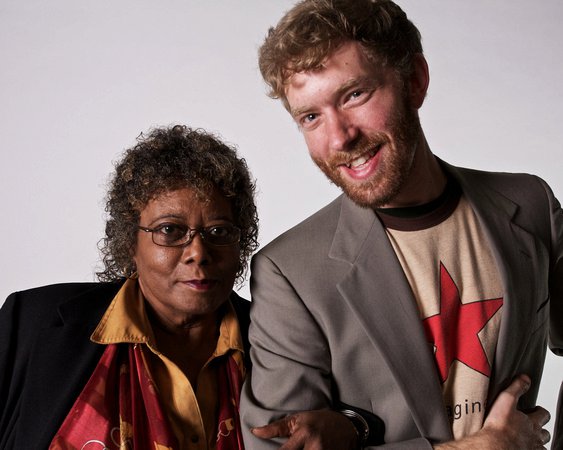
Soon after I parted ways with BFC, Dorothy reached out to me. We got lunch. I was grieving for the loss of this community that had been such a big part of my life, and she just held that space with me.
“People have got to feel,” she said. “And when people feel things together, they make things happen.”
By then, Dorothy had a new set of pearly white teeth. That’s what I remember from our last time together: a big grin, full of grace.
Humanism vs Human Services
Years ago, when I first began to consider the possibility of what would later become the Open Referral Initiative, I reached out to my former colleague Matt Siemer with a question.
When we’d worked together at Bread for the City, amid marathon Smiths playlists and recurring Werner Herzog impersonations, Matt had once expressed a strong distaste for the phrase “human services.” At the time I hadn’t really seen the problem. But when I suddenly found myself using the phrase with some regularity, something about it did feel off. I couldn’t put my finger on it (nor did I prefer “social services” for any clear reason). So I looped back to Matt, who had since gone off to study ‘hermeneutics,’ in what I imagined to be a remote stone tower so sky-high and constantly buttressed by clouds that one could simply drink from goblets suspended out of the window.
Matt’s response came all at once (via Facebook message) and left me sitting in silent awe for a while. It has lingered with me ever since, so I eventually asked Matt if I could share it here. Thanks to Matt for his permission, and generally for his weird and wonderful example of how to be a human being.
§
My trouble, if I’m remembering right, was not only with the words themselves (that they inadequately described the group of activities comprised therein), but that calling those tasks “human” services seemed an especially damning reflection of what we thought we were capable of as human beings.
Humanism was once the study of how best to understand each other. The thinking was that conflicts between human beings were largely the result of misinterpretations, and that by fostering a society rich in literature and the arts, people could use those narratives to connect their situations to those of other people and gain greater sympathy for the complexity of our shared condition. Compassion, community, mutual progress and peace were thought to be the logical end of efforts like universal education, public debate, and (above all) acknowledgement that we are all responsible for the welfare of each other. Humanism is often seen as the kernel leading to the enlightenment, democracy, social justice work, and public literacy campaigns. To be human under this rubric meant to strive toward the betterment of all, and to find in that striving a meaning for existing together. To be human meant to carry your part of the burden. I guess when I was younger I was guided by this definition of human, and as a result the idea of emergency assistance of different kinds being described as “human” services left a decidedly rank odor.
For, by contrast, what do we find under our so-named “human” services? The administration of various types of care for low-income people, almost always underfunded, taken on by some only because it hasn’t been appropriately assumed by all. And because there are so many in need and so few accepted models of assistance, too many fall through and the ones assisted are too rarely transformed by the intervention. And though they would like to do more, the few people interested in solving the issue of poverty are being forced to wait until the very last possible moment, when a person is homeless or horribly sick or hungry or mentally damaged, to offer help. What’s human about that—about neglecting widespread distress until it’s virtually unfixable and then handcuffing the people designated to help?
I don’t suppose you would blame me for objecting to labeling such services under a definition of human. Is it human to make hell on earth for other people? Is it human to ignore the basic needs of another body until they become so severe that the person can’t function in normal society? Is it human to have the vast majority of a people reify an economic structure based on the scarcity of currency and then blame the people who can’t access the scarce resource?
What we exhibit, we are. And what we do defines us. Human services are cruel, cowardly, resentful, and ungracious. They exist that way because they’re constructed not for the benefit of those who would like to help, but for those spiteful belligerents who don’t want to see assistance provided until someone is squirming on the ground begging for it. Under this model, solipsists can willfully ignore each other, buying trinkets with cotton paper that has value only because some have it and others don’t. And they will argue and fight to the point of hyperbole to make sure the human race isn’t acknowledged, understood, or cared for.
So call these services “human” if they’re human. But let’s also then define what human means: flawed, callous, meager, tardy, hard-hearted, inadequate, and lack-luster. Let’s call humans a race of sick souls eager to inflict sadness on each other, pitiless and ungracious animals not fit to exploit the gifts their forbearers passed on as the result of mutual labor. And if “human services” are the best effort that we can muster, if that’s the best we can do for each other, then let’s speak of humans as a black stain and keep blameless the minority that would rather work toward our extinction.
I suppose I would have said something to that effect. But that was six years ago when I was still thinking in terms of politics. It could be said now, perhaps more fairly, that the vast majority of people are unintentionally cruel when poverty is an abstraction, but when the reality of poverty reaches them on a visceral level, their reactions are surprising, emotional, compassionate, and occasionally inspired. Human services are as short-sighted and slapdash as any other human effort. They’re not perfect and they never will be. But they exist because a plurality of people still try to understand each other and still act when they meet an injustice. I can’t help but think of all the people whose lives have been completely changed by the Catholic Workers or the unions or Bread for the City or even the federal efforts like SCHIP or SNAP, and I have to acknowledge they have an impact, even if it isn’t nearly what we would all like it to be. In a way, it’s appropriate that efforts to save lives are considered “human” services. They may be the last vestige of a noble effort meant to teach us all how to be human.
— Matt Siemer